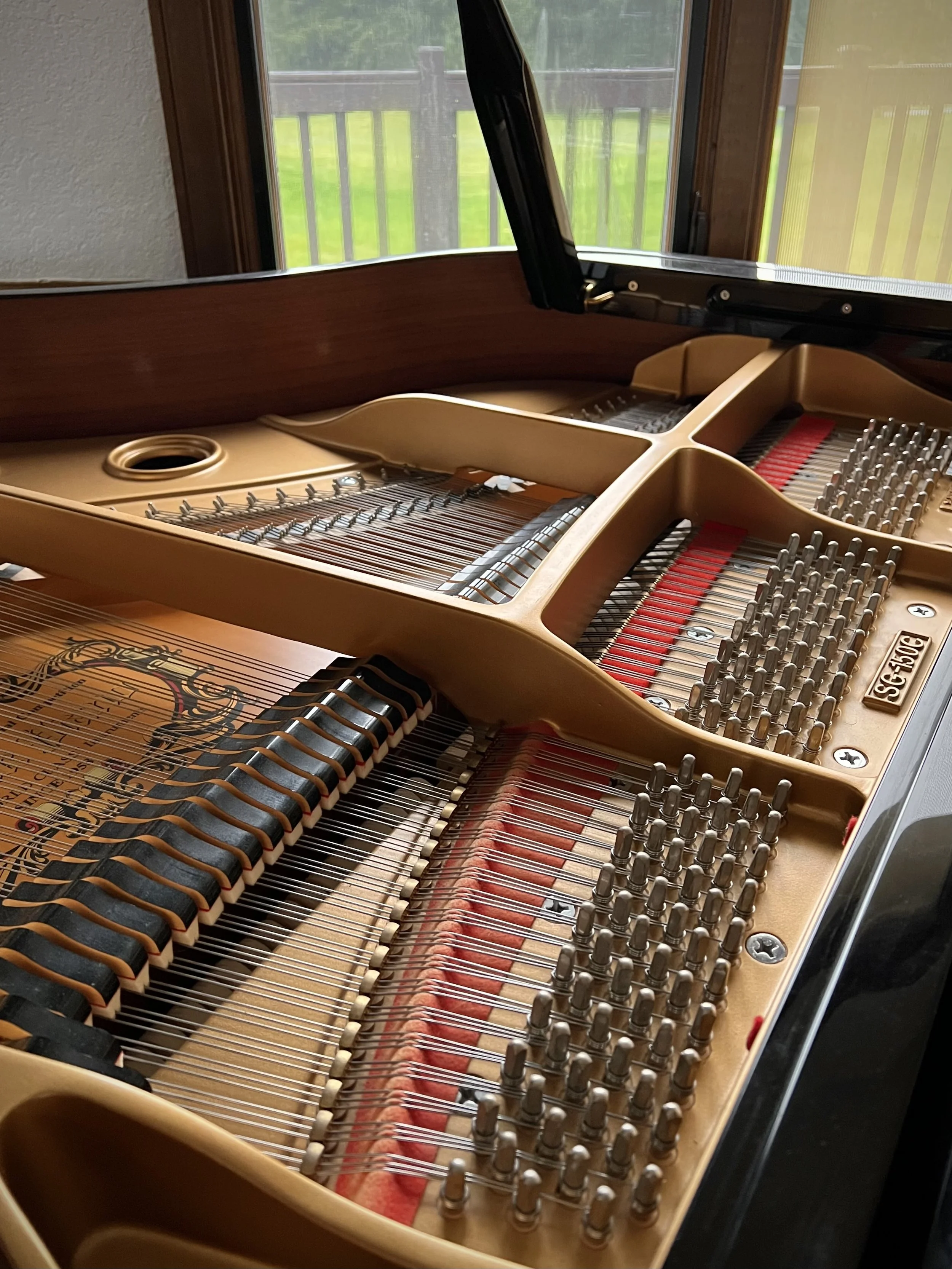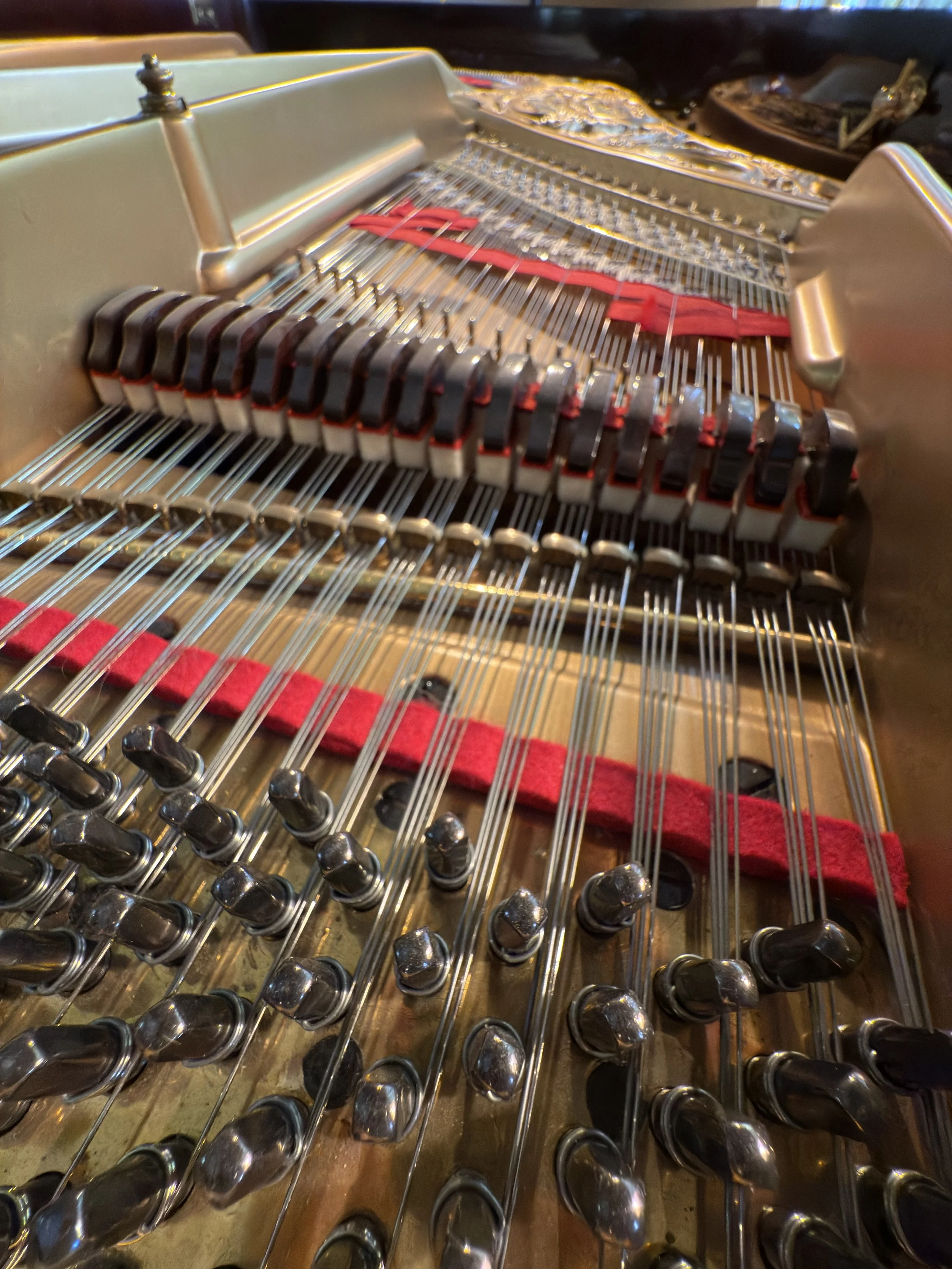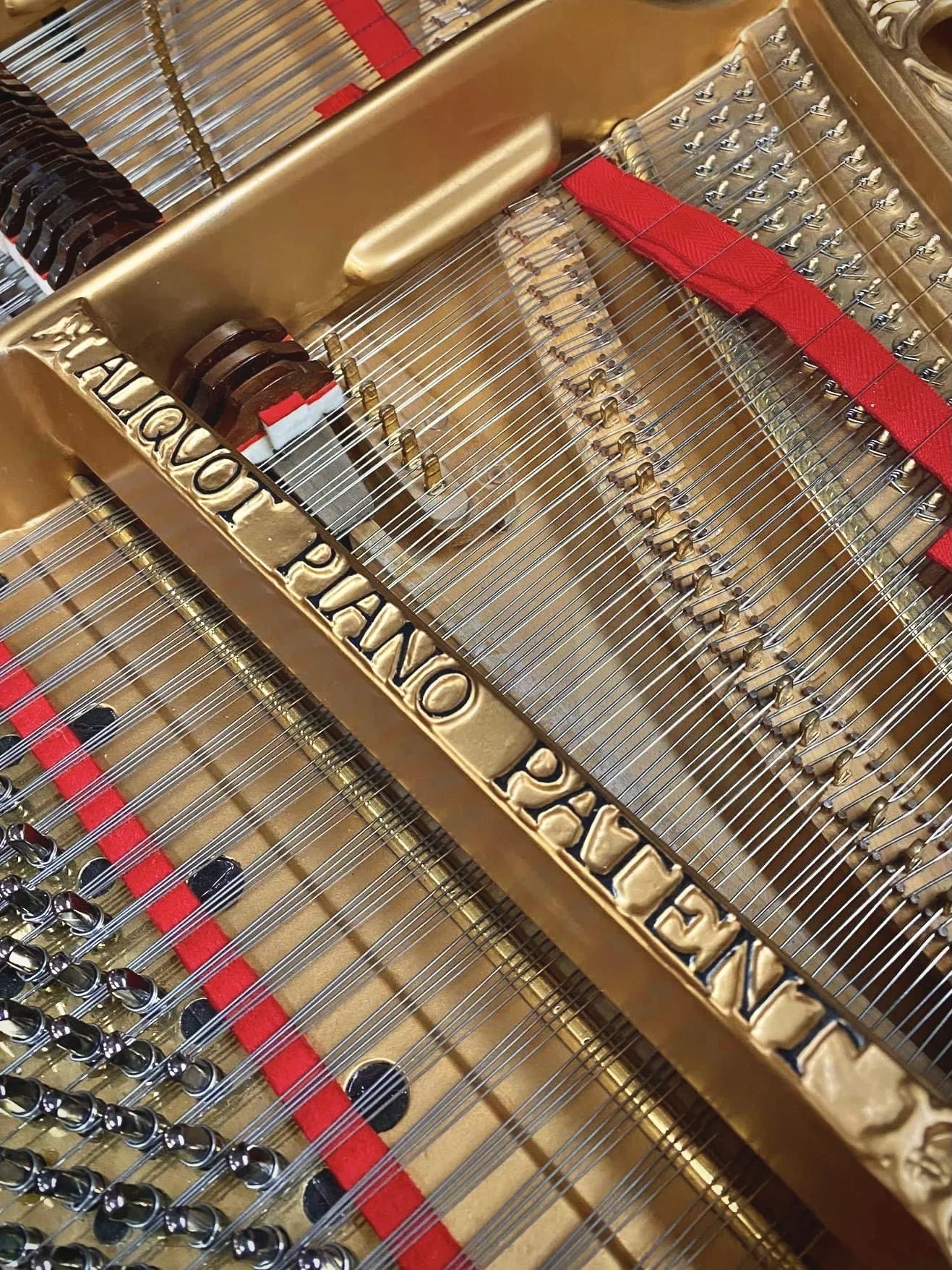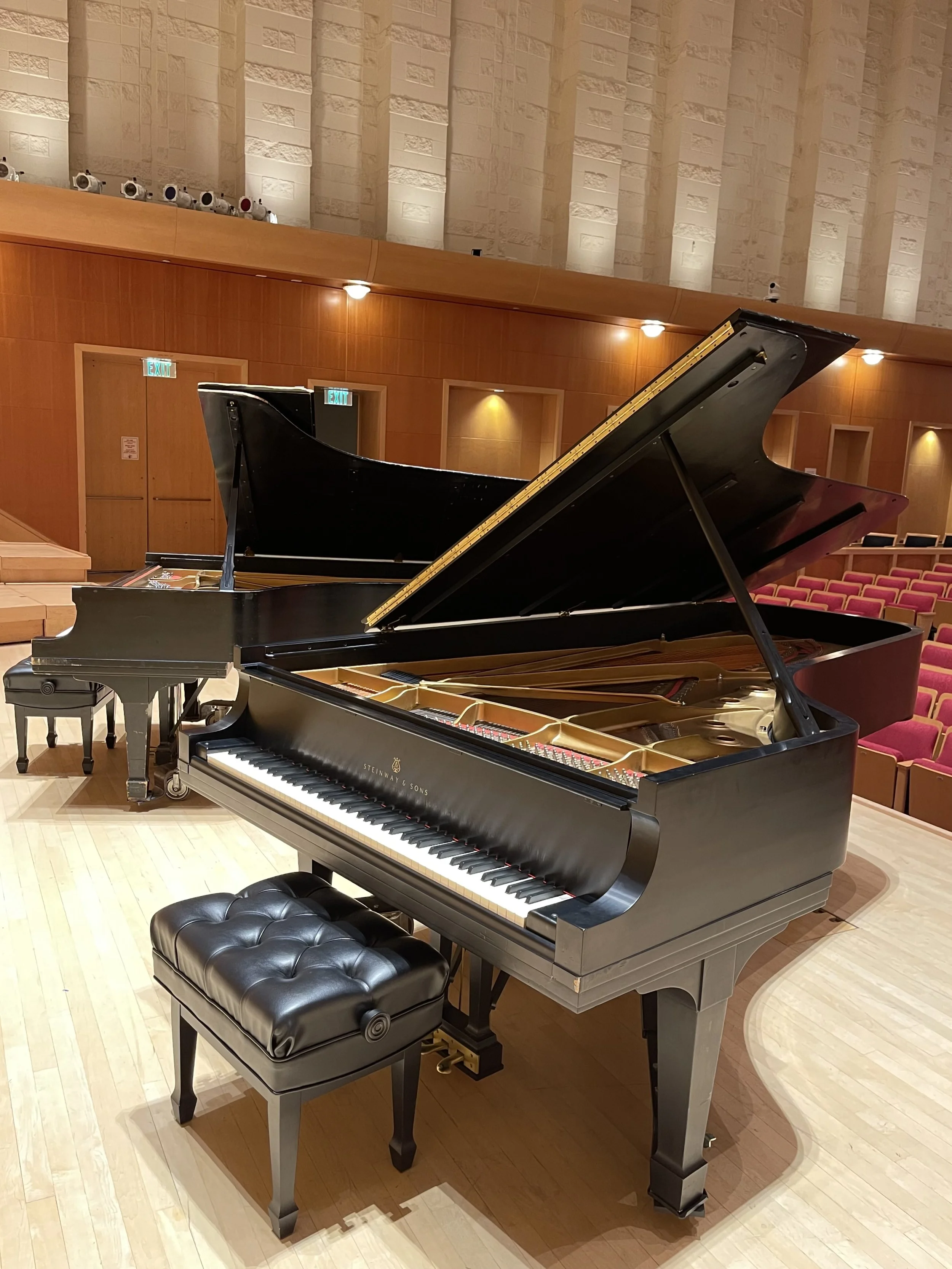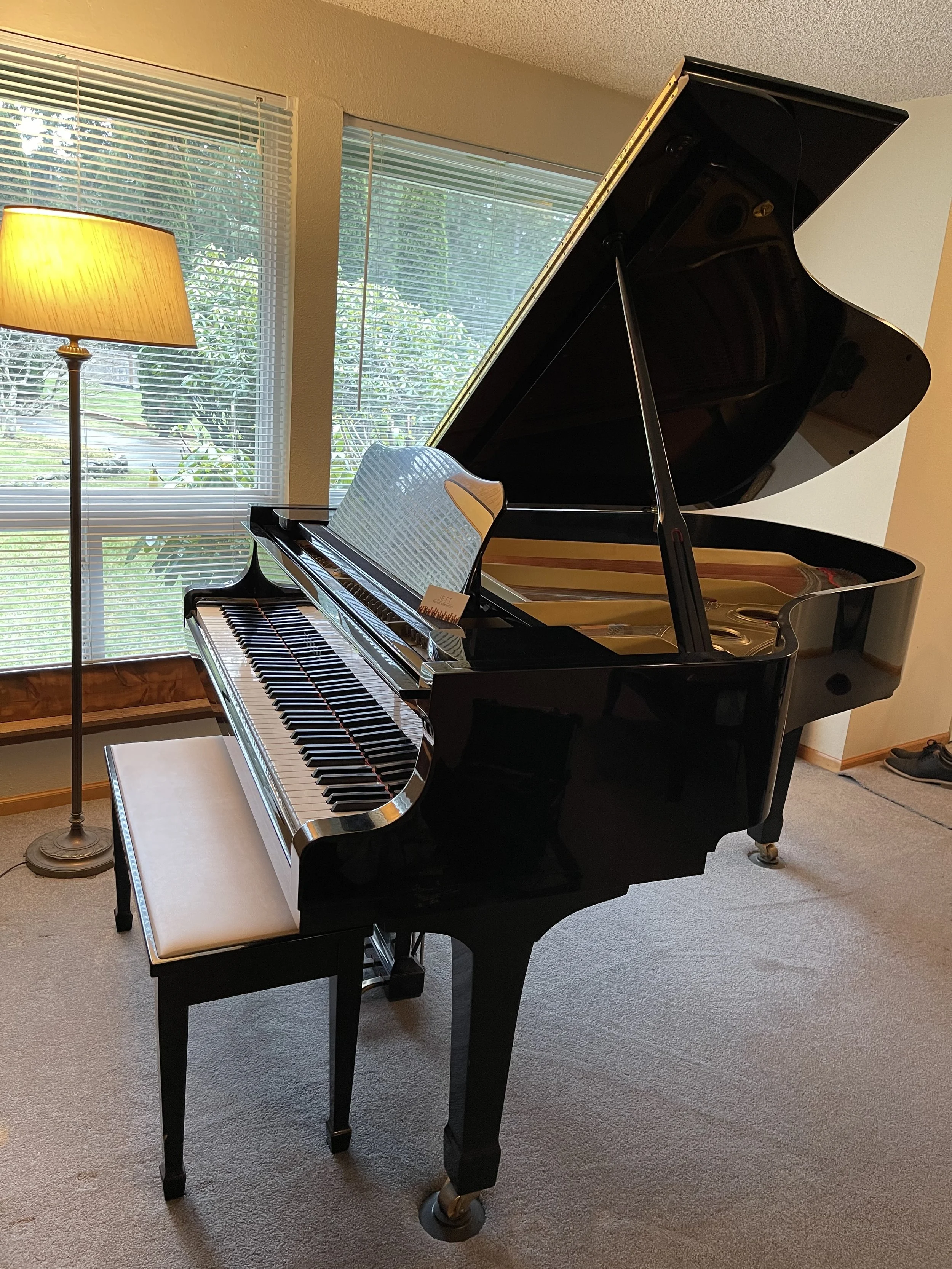
Piano Tuning
Tuning is the most important service, not only to maintain the best sound a piano can produce, but also to maintain consistent tension on the soundboard. Most manufacturers recommend tuning twice per year.

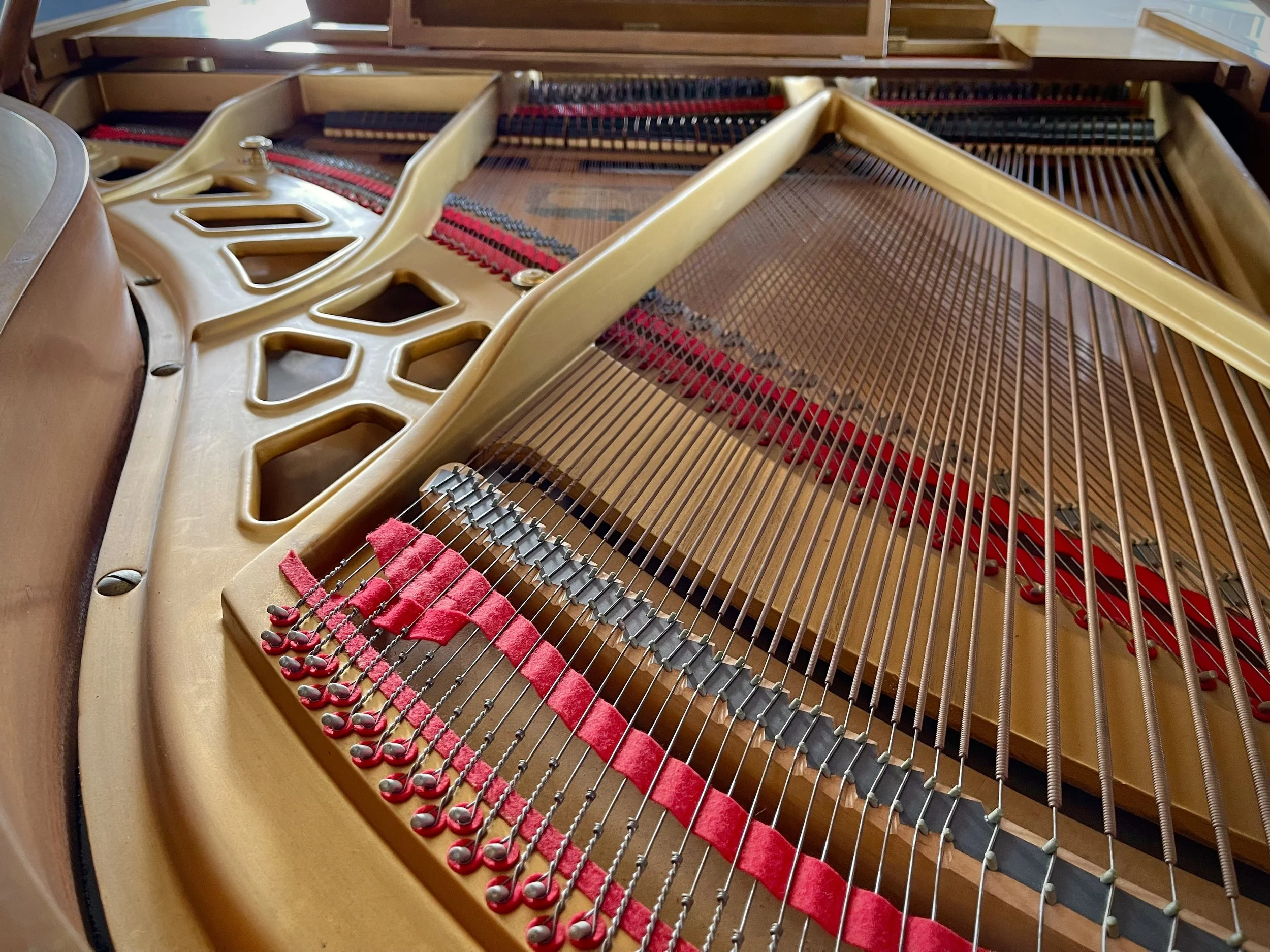
Seasonal changes in humidity, temperature, and heating or AC cause wood and metal parts to expand and contract, affecting string tension and pitch. Each string holds about 150 to 200 pounds of tension. With over 200 strings, the piano is designed to be constantly under 15 to 20 tons of tension. Over time, strings stretch, losing tension and causing pitch to drop. Regular tuning maintains proper tension and pitch.
Without tuning, the pitch will eventually drift far enough that a pitch correction is needed. This is a preliminary tuning that brings the piano closer to standard pitch before fine-tuning can be done.
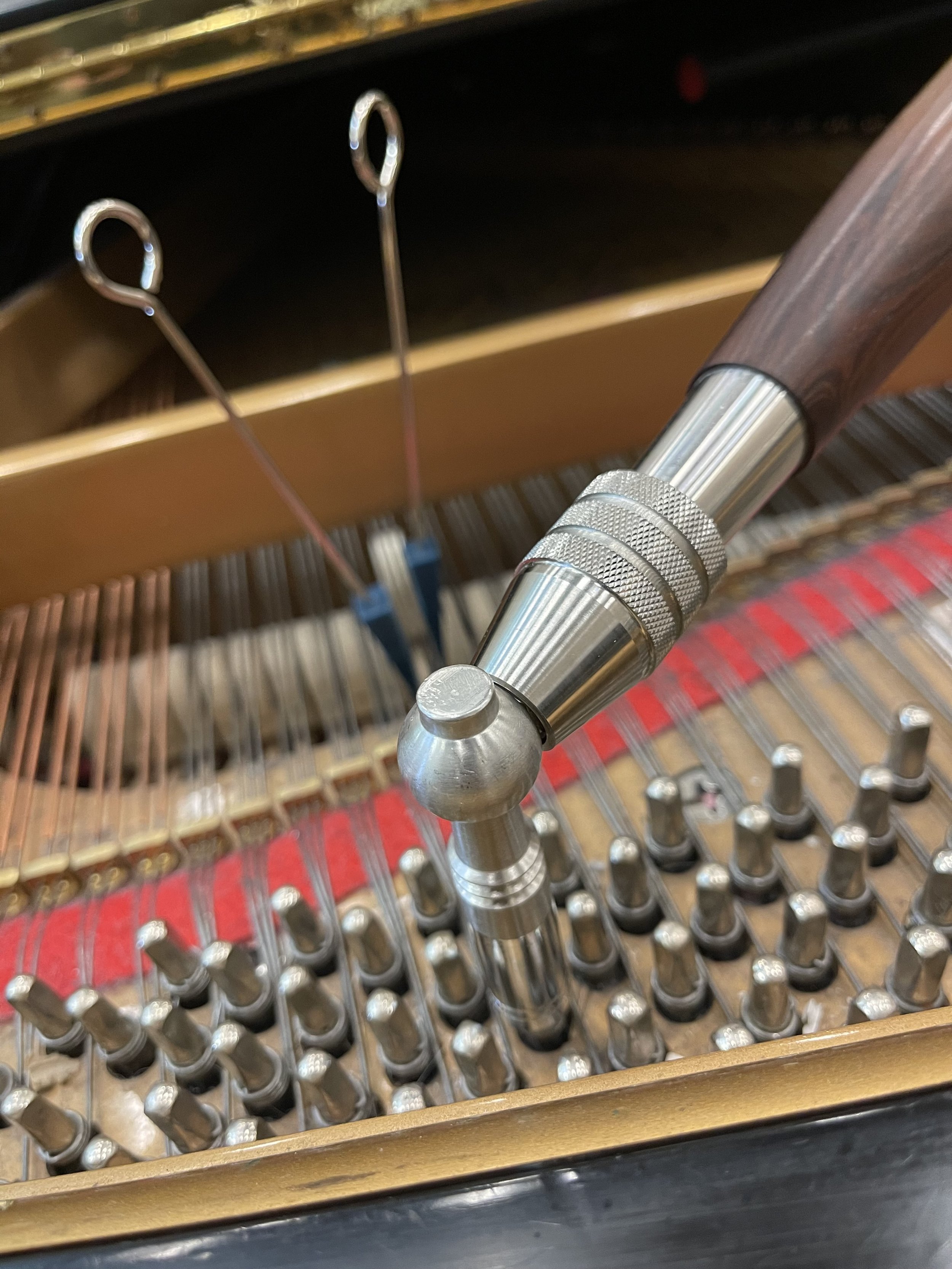

During tuning, changing the tension of a string affects nearby strings, even if they have already been tuned, so increasing the tension of a string decreases the tension of the next few strings on either side of it, while decreasing the tension of a string increases its neighbors’ tension.
The more a string’s tension is changed, the more its neighbors are affected. If a piano is only 5–10 cents out of tune, tuning a string has little effect on its neighbors, but when further out of tune, the tension needed to bring a string back to pitch significantly shifts neighboring strings—even ones already tuned—making an accurate tuning impossible. Pianos in this situation require a pitch correction first.
A pitch correction is a quick tuning that brings the piano as close to proper pitch as possible. Technicians estimate an over- or under-pull on each string, anticipating how nearby strings will affect its pitch. Every piano is different—some have longer strings, others “springier” soundboards—so these adjustments are always estimates. The result isn’t precise enough to be an acceptable tuning but brings the piano close enough for a second, fine tuning to be possible.
If the piano is significantly off-pitch, multiple corrections may be needed; if it’s close to standard pitch, no correction is needed. Regular tuning ensures that the piano remains in good condition and reduces the need for pitch corrections.